

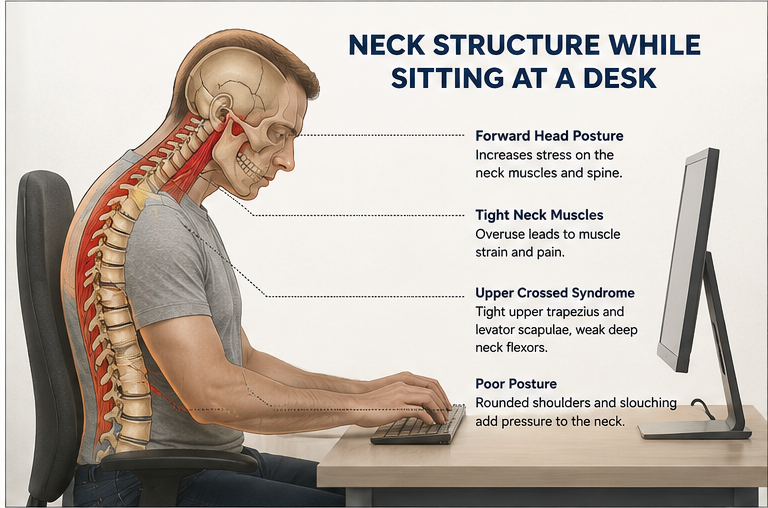
In today's digital world, desk jobs have become one of the leading causes of neck pain. Many people spend hours working on computers, laptops, and mobile phones, reading books without realizing the stress these activities are placed on the neck and shoulders. Over time, wrong positioning may result in poor posture, and prolonged sitting can lead to discomfort, stiffness, and chronic cervical pain.
Cervical pain physiotherapy at Aspire physiotherapy focuses on relieving pain, improving neck mobility, correcting posture, and preventing recurrence. Physiotherapists at Aspire Physiotherapy provide comprehensive neck pain treatment in Gurgaon through manual therapy, stretching exercises, strengthening exercises, office posture correction, and ergonomic education.
When you sit for long hours in front of a computer or continuously look down at your phone, your neck remains in a forward-bent position. The human head weighs approximately 4–5 kg, but when it is tilted forward, the load on the cervical spine increases significantly. This extra stress places continuous strain on the neck muscles, ligaments, and joints.
Several workplace habits can contribute to neck pain, including:
Preventing neck pain starts with healthy workplace habits and proper posture.
Taking regular movement breaks helps reduce stress on the neck and shoulder muscles and prevents stiffness from developing.
Sit upright and gently pull your chin backward while keeping your head level. Hold for 5 seconds and repeat 10 times. This exercise helps correct forward head posture.
Tilt your head toward one shoulder until you feel a gentle stretch on the opposite side of the neck. Hold for 20–30 seconds and repeat on both sides.
Slowly turn your head to one side as far as comfortable. Hold for a few seconds before repeating on the opposite side.
Roll your shoulders backward in a circular motion 10–15 times. This helps relieve tension in the neck and upper back.
Squeeze your shoulder blades together and hold for 5 seconds. Repeat 10 times. This exercise improves posture and upper back strength.
Office posture correction is an important part of recovery. Poor posture places excessive strain on the neck and shoulders, leading to muscle fatigue and stiffness. Physiotherapists educate patients on maintaining proper sitting posture and healthy movement habits throughout the workday. Improving posture not only reduces pain but also prevents neck discomfort.
To maintain proper ergonomics, keep your monitor at eye level, your elbows at approximately 90 degrees while typing, and both feet flat on the floor. Use a chair with proper back support, avoid cradling the phone between your neck and shoulder, and use a headset for long phone calls. Keep frequently used items within easy reach and take regular movement and stretching breaks throughout the day.
Heat therapy helps relax tight neck muscles, improve blood circulation, and reduce stiffness. Cold therapy can help decrease pain and inflammation, especially after a recent strain.
You should consult a physiotherapist if:
Early intervention through cervical pain physiotherapy can help prevent chronic pain and restore normal movement and function.
How often should I do neck exercises?
Most stretching exercises can be performed 2–3 times daily unless otherwise advised by your physiotherapist.
Can poor posture cause headaches?
Yes. Forward head posture often leads to tension headaches due to increased stress on the neck muscles.
Is heat or ice better for neck pain?
Heat is generally helpful for muscle tightness, while ice is beneficial immediately after an acute strain or injury.
When should I see a physiotherapist for neck pain?
If your pain lasts more than a few days, radiates into your arms, or is accompanied by numbness or weakness, seek professional evaluation promptly.
At Aspire Physiotherapy, we provide personalized assessment, posture correction, manual therapy, ergonomic guidance, and evidence-based exercise programs to help you recover from neck pain caused by desk work.
Book Your Consultation-+91-9650383603