

Physiotherapy during pregnancy, helps women stay active, comfortable, and healthy throughout pregnancy. It includes safe and gentle exercises that improve posture, reduce pain, strengthen muscles, and prepare the body for labor and delivery.
A physiotherapist recommends exercises according to the mother’s trimester, health condition, and individual needs to ensure both the mother and baby remain safe.
If you are looking for Prenatal physiotherapy near me or Antenatal care exercises in Gurgaon, Aspire Physiotherapy is the best to support you throughout your pregnancy journey.
Every pregnancy is different, so we create a personalized treatment plan based on your trimester, health condition, and individual needs. With safe, guided exercises and physiotherapy, we help reduce back pain, pelvic pain, improve posture, strengthen your muscles, and prepare your body for labor and delivery.
Our goal is to help you stay active, comfortable, and confident throughout your pregnancy while keeping both you and your baby safe.
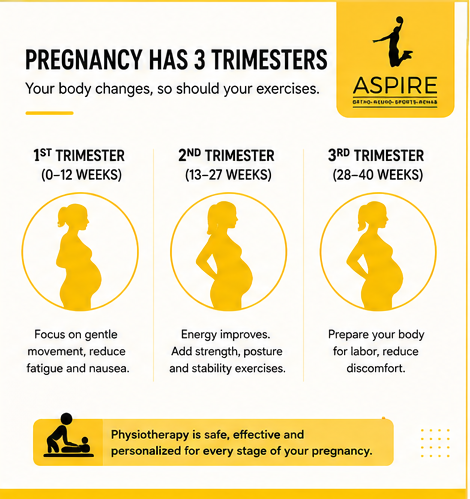
Pregnancy has three stages, called trimesters. In every trimester, your body changes in a different way and so the exercises also modify with each stage.
The right exercises at the right time can help you feel more comfortable, reduce pain, and keep you active during your pregnancy.
This is the start of your pregnancy. During these first few weeks, your body begins to adjust to many new changes. You may feel tired, have morning sickness, or notice mood swings. At this stage, it's best to keep your exercises gentle and simple.
This is usually the easiest and most comfortable stage of pregnancy. You may start feeling more energetic, and your baby bump becomes more noticeable. As your baby grows, you might feel some back pain or notice changes in your posture. This is a good time to stay active with safe pregnancy exercises.
This is the final stage of pregnancy. Your baby is growing quickly, and your body is getting ready for labor. You may feel heavier, get tired more easily, or have back and pelvic pain. Gentle exercises, stretching, and breathing exercises can help you stay comfortable and prepare your body for delivery.
In the first trimester, the goal is to stay active without putting stress on the body.
Exercises:-
During the second trimester, energy usually improves, so strength and posture exercises can be added.
Exercises:-
In the third trimester, the focus is on reducing discomfort and preparing the body for labor.
Exercises:-
Breathing exercises can help promote relaxation, reduce stress, improve breathing awareness, and prepare the mother for labour. They can be practiced gently throughout pregnancy according to individual comfort and medical advice.
It’s completely normal to have some back pain during pregnancy. As your baby grows, your body carries more weight and your posture changes, which puts extra pressure on your back. This is the time when you start searching pregnancy back pain relief near me or in Palam Vihar, Pelvic girdle pain treatment in Gurgaon.
At Aspire physiotherapy we make it simple with appropriate through appropriate Pelvic floor strengthening for pregnancy and Pregnancy lower back ache physiotherapy.
Pelvic floor exercises are relaxation techniques to prevent perineal tearing during pushing phase
Before you start any exercise, make sure you ask your doctor or physiotherapist if it’s safe for you.
Yes. A personalized physiotherapy program can help you remain active while adapting exercises to the physical changes occurring during each trimester.
As the baby grows, additional weight and changes in posture and centre of gravity can place greater stress on the lower back and pelvis, contributing to discomfort.
Pelvic-floor exercises, pelvic tilts, gentle stretching, breathing and relaxation exercises, and appropriately guided birth-ball exercises can be incorporated to improve strength, mobility, and body awareness.
Regular, appropriate exercise can support circulation and may help with common pregnancy-related problems such as swelling in the legs and feet and muscle discomfort.
Lamaze breathing involves practicing controlled, rhythmic breathing to encourage relaxation and help the mother develop breathing awareness for labour. It can be included as part of a guided prenatal preparation program.
Yes. Strengthening the core, back, pelvic-floor, and leg muscles during pregnancy can help prepare the body for labour and support recovery and everyday activities after childbirth.
No. Exercise needs to be modified according to the trimester, health condition, symptoms, and individual needs. It is important to consult your doctor or physiotherapist before beginning or changing an exercise program.
Looking for expert physiotherapy care in Gurugram? Visit Aspire Physiotherapy at Palam Vihar or Gurugram Sector 50 for personalized treatment plans.
Book Your Consultation-+91-9650383603
Authored by:
Dr. Aayushi Tanwar, B.Pt
Dr. Aayushi is a dedicated Physiotherapist at Aspire Physiotherapy with expertise in the assessment and rehabilitation of musculoskeletal conditions including pregnancy. She is passionate about helping individuals relieve pain, improve posture, and restore functional movement through evidence-based physiotherapy. Her focus is on educating patients with practical strategies to prevent and manage lifestyle-related conditions, including pregnancy related pains and aches.